

Cheapest Ways to Check Wallet Balances on Base and Solana for Agents
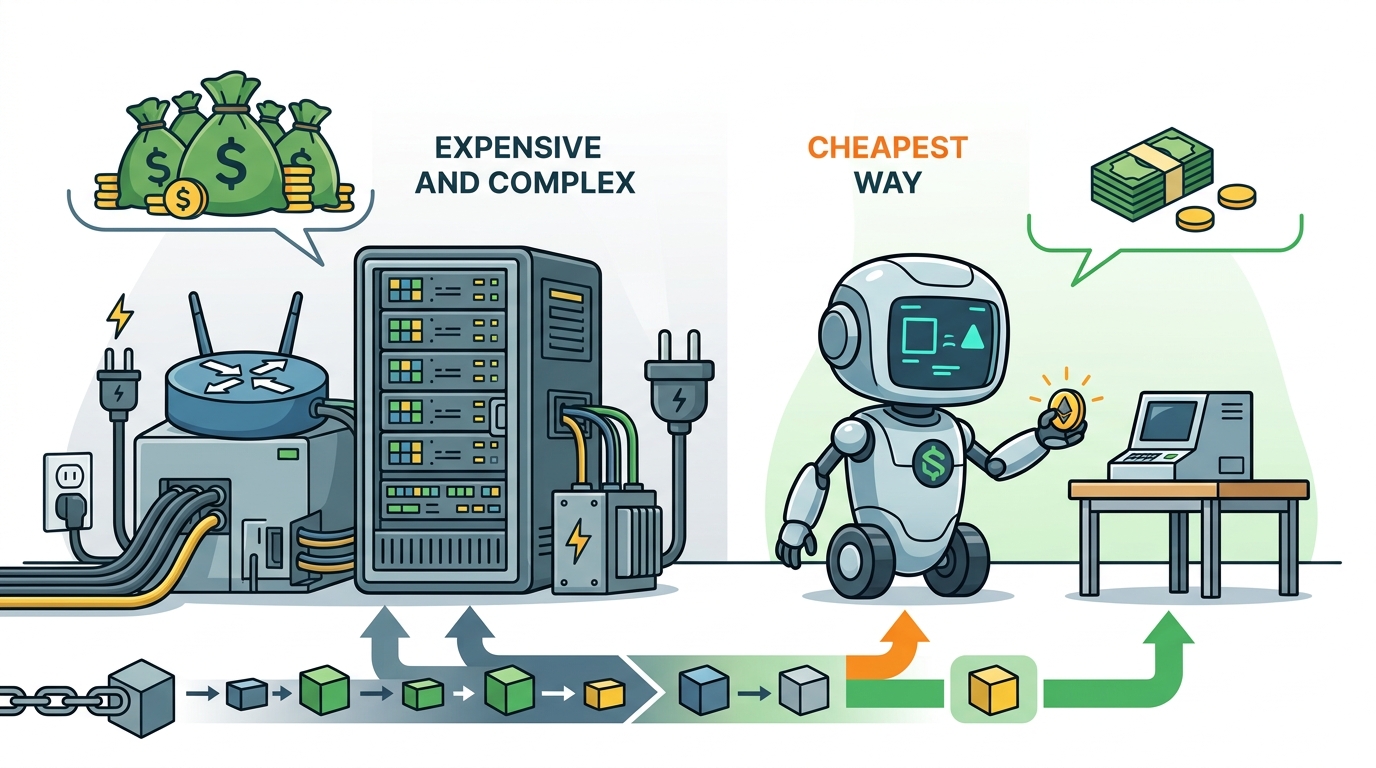
Running your own node is the most expensive and complex way to check wallet balances on Base and Solana. For agents, the cheapest method is using a pay-per-request API or a low-cost subscription that handles the RPC complexity for you. BuildAWallet offers a machine API specifically designed for this, allowing agents to read public chain data without managing infrastructure. This guide covers the most cost-effective options for checking balances, from free endpoints to specialized APIs.
Hosted RPC Endpoints
Hosted RPC endpoints are third-party services that provide access to blockchain nodes. They are the most common way for developers to interact with Base and Solana without running their own infrastructure. These services typically offer a free tier with rate limits and paid tiers with higher limits and better reliability. For agents, the cost of hosted RPC endpoints can vary significantly depending on the provider and the volume of requests.
Cost and Reliability
BuildAWallet Machine API
Free RPC Endpoints
Free RPC endpoints are public nodes that anyone can use to interact with a blockchain. They are the cheapest option, as they cost nothing to use. However, they come with significant limitations, including rate limits, potential downtime, and no service level agreements (SLAs). For agents, free RPC endpoints can be a good starting point for development and testing, but they are not recommended for production use.
Limitations of Free Endpoints
Free RPC endpoints are often shared among many users, which can lead to congestion and slow response times. They may also be subject to strict rate limits, which can prevent agents from making the necessary number of requests. Additionally, free endpoints do not offer any support or guarantees, so if they go down, your agent will be unable to function. This makes them unsuitable for critical applications that require high availability.
When to Use Free Endpoints
Free RPC endpoints are best used for development and testing. They allow you to build and debug your agent without incurring any costs. Once your agent is ready for production, you should consider moving to a paid RPC endpoint or a specialized API like the BuildAWallet machine API to ensure reliability and performance.
JSON RPC Methods
JSON RPC methods are the standard way to interact with a blockchain node. They allow you to request specific data, such as wallet balances, transaction history, and block information. For Base, which is an EVM-compatible chain, you can use standard Ethereum JSON RPC methods. For Solana, you need to use Solana-specific JSON RPC methods. Understanding these methods is essential for building an agent that can check wallet balances.
Base (EVM) JSON RPC Methods
To check a native ETH balance on Base, you can use the eth_getBalance method. This method takes a wallet address and a block tag (e.g., 'latest') and returns the balance in wei. To check a USDC balance, you need to use the eth_call method to interact with the USDC contract. This is more complex and requires you to know the contract address and the function signature for the balanceOf method.
Solana JSON RPC Methods
To check a native SOL balance on Solana, you can use the getBalance method. This method takes a wallet address and returns the balance in lamports. To check a USDC balance, you need to use the getTokenAccountBalance method. This method takes a token account address and returns the balance in the token's smallest unit. Solana's JSON RPC methods are more specific to the chain's architecture, which can make them more complex to implement than EVM methods.
Token Balance APIs
Token balance APIs are specialized services that simplify the process of checking token balances. They abstract away the complexity of interacting with smart contracts and provide a simple, easy-to-use interface. These APIs are often more expensive than raw RPC endpoints, but they can save you time and effort. For agents, token balance APIs can be a good option if you need to check balances for many different tokens.
Advantages of Token Balance APIs
Cost Comparison
| Option | Cost | Reliability | Complexity | Best For |
|---|---|---|---|---|
| BuildAWallet Machine API | $12 - $99/30 days | High | Low | Agents Needing Simple Balance Checks |
| Token Balance APIs | Varies | High | Low | Agents Checking Many Tokens |
Key Takeaways
- Running your own node is the most expensive and complex way to check wallet balances.
- Free RPC endpoints are the cheapest option but are not reliable enough for production use.
- Hosted RPC endpoints offer a good balance of cost and reliability for most agents.
- BuildAWallet offers a specialized machine API for Base and Solana that is designed for agents.
- Token balance APIs can simplify the process of checking balances for many different tokens.
- The best option for your agent depends on your specific needs, budget, and volume of requests.
- Always consider reliability and support when choosing an RPC endpoint or API.
- Start with free endpoints for development and move to a paid service for production.
Frequently Asked Questions
What is the cheapest way to check wallet balances on Base and Solana?
The cheapest way is to use free RPC endpoints. However, these are not reliable enough for production use. For production, the cheapest reliable option is often a low-cost hosted RPC endpoint or a specialized API like the BuildAWallet machine API.
Do I need to run my own node to check wallet balances?
No, you do not need to run your own node. You can use a hosted RPC endpoint or a specialized API to check wallet balances. Running your own node is only necessary if you need very high volume or specific features that are not available from third-party services.
What is the difference between a native balance and a token balance?
A native balance is the balance of the chain's native currency (ETH on Base, SOL on Solana). A token balance is the balance of a specific token (e.g., USDC) that is issued on the chain. Checking a token balance requires interacting with the token's smart contract, which is more complex than checking a native balance.
How much does it cost to use a hosted RPC endpoint?
The cost of a hosted RPC endpoint varies depending on the provider and the plan. Free tiers are available from most providers, but they have rate limits. Paid plans can range from a few dollars per month to hundreds, depending on the number of requests and the level of support.
What is the BuildAWallet machine API?
Can I use the BuildAWallet machine API to check USDC balances?
Yes, the BuildAWallet machine API supports checking native USDC balances on both Base and Solana. A composite native + USDC snapshot costs two API units.
Is it safe to use a third-party RPC endpoint?
Yes, it is generally safe to use a third-party RPC endpoint. However, you should choose a reputable provider and be aware of the data you are sending. Never send your private key or seed phrase to a third-party service. The BuildAWallet machine API never accepts a seed phrase or private key.
How do I get started with the BuildAWallet machine API?
To get started with the BuildAWallet machine API, you need to subscribe to a plan, connect the wallet that will pay, sign the one-time login challenge, and transfer the selected plan's exact native USDC amount on Base or Solana. Confirm its transaction ID and create the API key.
Conclusion
Choosing the right way to check wallet balances on Base and Solana is critical for building a cost-effective and reliable agent. While free RPC endpoints are the cheapest option, they are not suitable for production use. Hosted RPC endpoints and specialized APIs like the BuildAWallet machine API offer a better balance of cost, reliability, and ease of use. By understanding the different options and their trade-offs, you can choose the best solution for your agent's specific needs. BuildAWallet provides a powerful and flexible platform for both human and non-human wallet interactions, making it an ideal choice for developers building agents in the Web3 ecosystem.