

Cheapest Ways to Check Base and Solana Balances for Agents in 2026
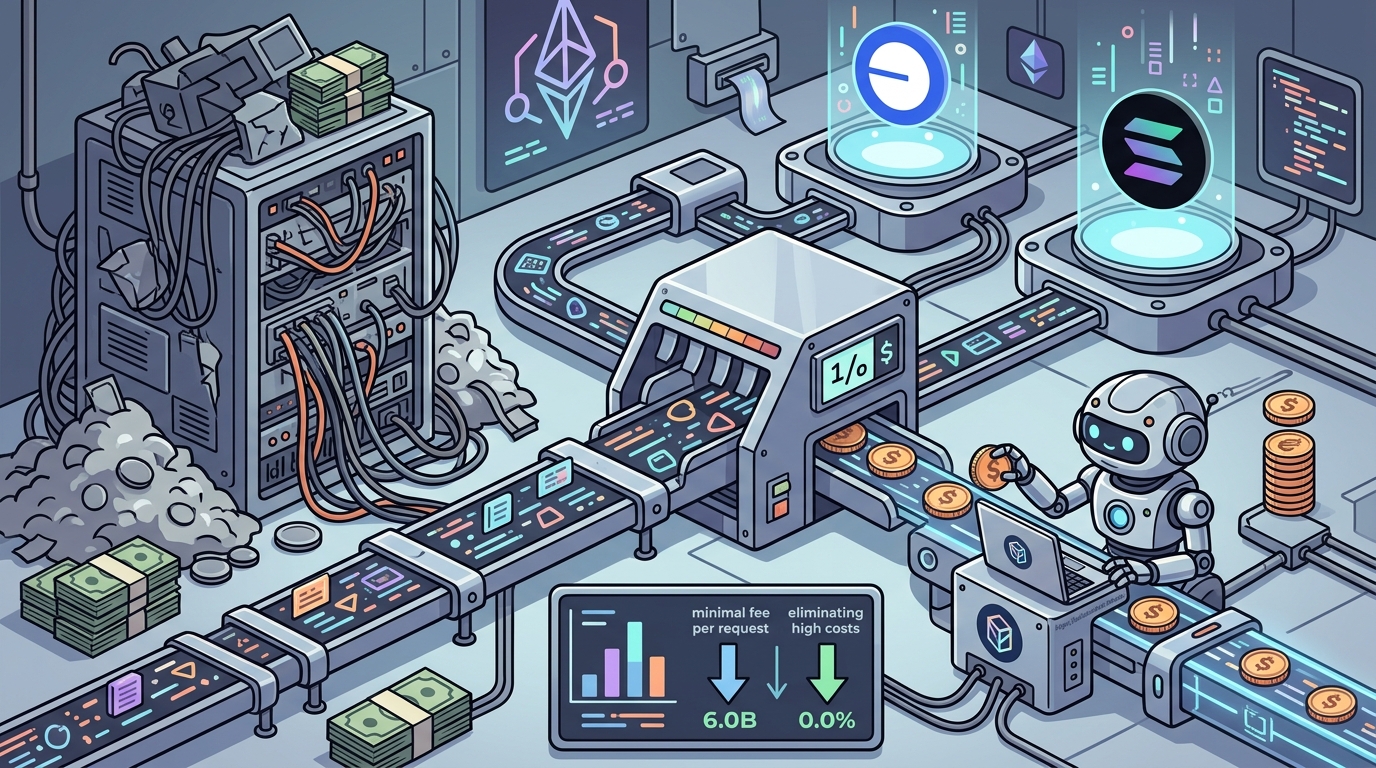
The cheapest way to check wallet balances on Base and Solana from an agent without running your own node is to use a pay-per-call API that charges a flat, minimal fee per request. This approach eliminates the high infrastructure costs of self-hosting nodes while providing reliable, low-latency data. BuildAWallet offers a machine-readable interface designed specifically for autonomous agents, allowing them to query balances on ten mainnets, including Base and Solana, for a fraction of a cent per call. This guide covers the most cost-effective methods for agents to access on-chain data, comparing hosted RPCs, free endpoints, and specialized APIs.
Hosted RPC Endpoints
Hosted RPC endpoints are third-party services that maintain blockchain nodes and provide API access to their data. For agents, these services offer a balance between cost and reliability. While self-hosting a node requires significant capital expenditure for hardware and bandwidth, hosted providers operate on a subscription or usage-based model. This makes them a viable option for agents that need consistent access to Base and Solana data without managing infrastructure.
Cost Structure and Limitations
Most hosted RPC providers charge monthly fees that start at a baseline and increase with request volume. For an agent making frequent balance checks, these monthly fees can add up quickly. Additionally, many providers impose rate limits on free or lower-tier plans, which can cause requests to fail during peak usage. Agents must implement robust error handling and retry logic to manage these limitations effectively.
BuildAWallet Machine API
BuildAWallet provides a specialized machine API that addresses these pain points. Instead of a monthly subscription, the platform offers a pay-per-call model where agents pay only for the data they retrieve. This model is particularly advantageous for agents with variable workloads, as it eliminates the need to pay for unused capacity. The API supports ten mainnets, including Base and Solana, and provides a unified schema for querying balances across different chains.
Free RPC Endpoints
Free RPC endpoints are public nodes that allow anyone to query blockchain data without a subscription. These endpoints are often provided by blockchain developers or community members who want to support the ecosystem. While they appear to be the cheapest option, they come with significant risks for production agents.
Reliability and Rate Limits
Free endpoints are typically subject to strict rate limits and may be throttled during high network activity. This can lead to inconsistent data retrieval and failed requests. For an agent that requires reliable balance checks, relying on free endpoints can result in operational downtime. Agents must implement fallback logic to switch between multiple free endpoints, which adds complexity to the codebase.
Security Considerations
Using free endpoints also raises security concerns. Public nodes may log request data, potentially exposing the agent's activity patterns. While this is less of a concern for simple balance checks, it becomes a significant issue for agents that perform more complex operations. BuildAWallet's machine API is designed with privacy in mind, ensuring that agents can query data without exposing sensitive operational details.
JSON RPC Methods
JSON RPC methods are the standard protocol for interacting with blockchain nodes. For Base, which is an EVM-compatible chain, agents can use standard Ethereum JSON RPC methods to query balances. For Solana, which uses a different architecture, agents must use Solana-specific RPC methods. Understanding these methods is essential for building efficient balance-checking logic.
Base and EVM Chains
On Base, agents can use the eth_getBalance method to retrieve the native ETH balance of an address. This method takes an address and a block tag as parameters and returns the balance in wei. For stablecoins like USDC, agents must use the eth_call method to invoke the token contract's balanceOf function. This requires constructing a transaction object with the token contract address and the encoded function call.
Solana Specifics
Solana uses a different data model, where balances are stored in accounts rather than a single global state. Agents can use the getBalance method to retrieve the native SOL balance of an address. For token balances, agents must use the getTokenAccountsByOwner method, which returns a list of token accounts associated with the owner. This method is more complex than EVM-based queries and requires careful handling of the response data.
Token Balance APIs
Token balance APIs are specialized services that aggregate data from multiple sources to provide a unified view of an address's holdings. These APIs simplify the process of querying balances by handling the complexity of different chain architectures and token standards. For agents, these APIs can reduce development time and improve data accuracy.
Aggregated Data and Caching
Many token balance APIs use caching to improve performance and reduce costs. By caching balance data, these services can serve repeated requests without querying the blockchain directly. This is particularly useful for agents that check the same addresses frequently. However, caching can introduce latency, as the data may not reflect the most recent transactions. Agents must consider the trade-off between cost and data freshness when choosing an API.
BuildAWallet Portfolio Queries
BuildAWallet offers a portfolio query endpoint that retrieves native and stablecoin balances on every network that accepts the address in a single call. This endpoint is priced at one unit, making it a cost-effective option for agents that need a comprehensive view of an address's holdings. The portfolio query supports ten mainnets, including Base and Solana, and provides a unified response format that simplifies data processing.
Comparison of Balance Checking Methods
| Method | Cost | Reliability | Complexity | Best For |
|---|---|---|---|---|
| Self-Hosted Node | High (Hardware + Bandwidth) | High | Very High | High-Volume, Low-Latency Needs |
| Hosted RPC | Medium (Monthly Subscription) | Medium | Medium | Consistent, Moderate Volume |
| Free RPC | Low (Free) | Low | Low | Testing, Low-Volume |
| Pay-Per-Call API | Low (Per Request) | High | Low | Variable Volume, Agents |
Key Takeaways
- Pay-per-call APIs are the most cost-effective option for agents with variable workloads.
- Free RPC endpoints are unreliable for production use due to rate limits and throttling.
- Hosted RPCs offer a balance of cost and reliability but require monthly subscriptions.
- BuildAWallet's machine API supports ten mainnets, including Base and Solana, with a unified schema.
- Portfolio queries can retrieve balances on multiple chains in a single call, reducing request overhead.
- Agents should implement fallback logic to handle API failures and rate limits.
- Privacy is a key consideration when choosing an API, as public nodes may log request data.
- BuildAWallet's local signing model ensures that agents never expose private keys to third-party servers.
Frequently Asked Questions
What is the cheapest way to check balances on Base and Solana?
The cheapest way is to use a pay-per-call API like BuildAWallet's machine API, which charges a flat fee per request. This model eliminates the need for monthly subscriptions and is ideal for agents with variable workloads.
Can I use free RPC endpoints for production agents?
Free RPC endpoints are not recommended for production agents due to their low reliability and strict rate limits. They are better suited for testing and development environments.
How does BuildAWallet's machine API work?
BuildAWallet's machine API provides a unified interface for querying balances on ten mainnets. Agents can use the API to retrieve native and stablecoin balances, with a pay-per-call pricing model that charges a flat fee per request.
What is the difference between hosted RPCs and pay-per-call APIs?
Hosted RPCs charge a monthly subscription fee, while pay-per-call APIs charge a flat fee per request. Pay-per-call APIs are more cost-effective for agents with variable workloads, as they only pay for the data they retrieve.
Does BuildAWallet support Solana?
Yes, BuildAWallet supports Solana along with nine other mainnets, including Base, Ethereum, and Bitcoin. The machine API provides a unified schema for querying balances across all supported chains.
How can I ensure the privacy of my agent's requests?
Using a specialized API like BuildAWallet's machine API can help ensure privacy, as it is designed with privacy in mind. Public nodes may log request data, so it is important to choose a provider that prioritizes user privacy.
What is a portfolio query?
A portfolio query is a single API call that retrieves native and stablecoin balances on every network that accepts the address. This reduces the number of requests needed to get a comprehensive view of an address's holdings.
Can I use BuildAWallet's API without an account?
Yes, BuildAWallet's machine API supports a pay-per-call model that does not require an account. Agents can pay for each request using a USDC signature, making it easy to get started.
Conclusion
Choosing the right method for checking wallet balances on Base and Solana is critical for building efficient and cost-effective agents. While self-hosting nodes offers the highest reliability, it comes with significant infrastructure costs. Hosted RPCs provide a middle ground, but their monthly subscriptions can be expensive for agents with variable workloads. Free RPC endpoints are unreliable for production use, making them a poor choice for agents that require consistent data.
BuildAWallet's machine API offers a compelling solution for agents that need to check balances on Base and Solana without running their own nodes. The pay-per-call model ensures that agents only pay for the data they retrieve, making it a cost-effective option for variable workloads. The unified schema and support for ten mainnets simplify the development process, while the privacy-focused design ensures that agents can operate securely. For developers building autonomous agents, BuildAWallet provides the infrastructure needed to access on-chain data efficiently and affordably.
To get started with BuildAWallet's machine API, visit the BuildAWallet Machine page to explore the API documentation and pricing plans. You can also check out the Pricing page to see the available plans and pay-per-call options. For more information on how BuildAWallet supports both human and non-human users, visit the BuildAWallet homepage.