

The cheapest way to check wallet balances on Base and Solana from an agent without running a node is using a prepaid API unit model. BuildAWallet offers a free tier with 1,000 units and paid plans starting at $15 for 100,000 units. This guide covers hosted RPC endpoints, free options, JSON-RPC methods, and token balance APIs for autonomous agents.
Hosted RPC Endpoints
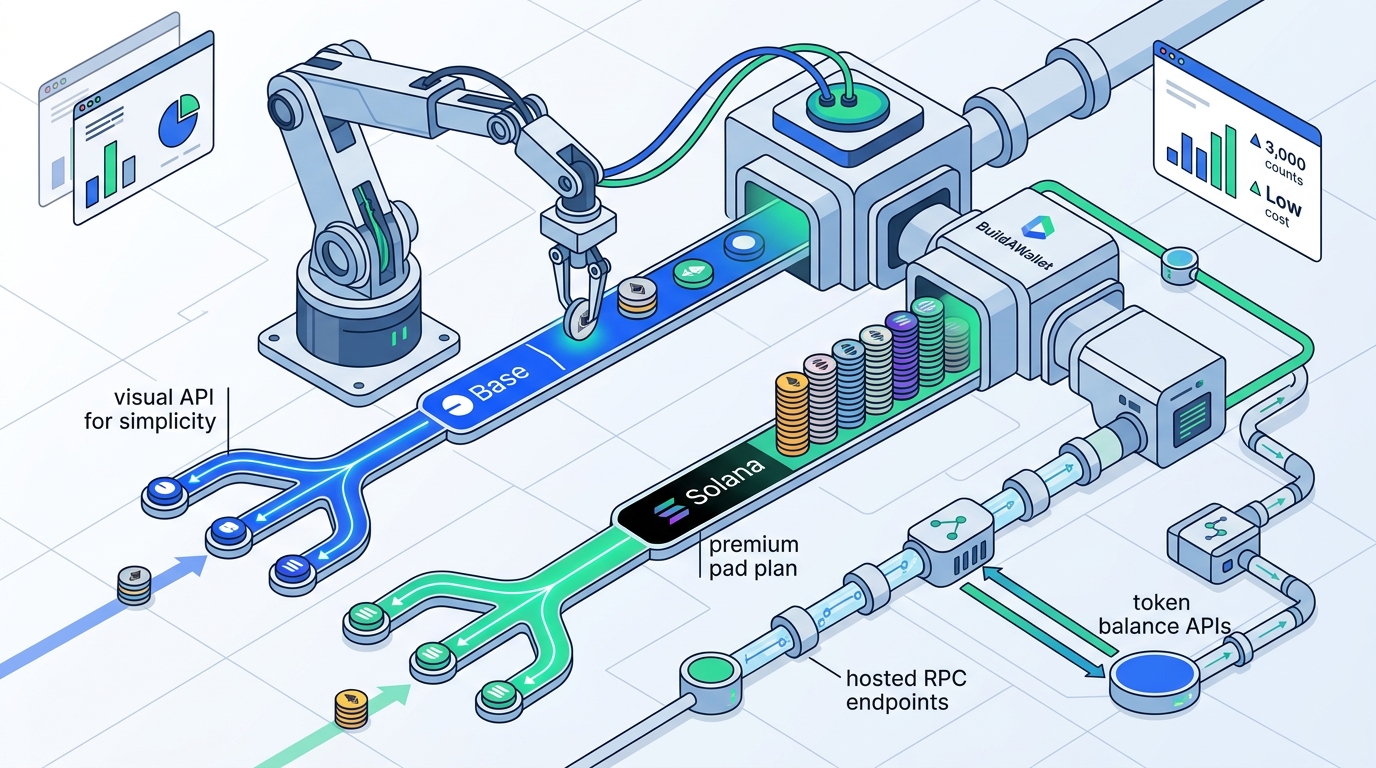
Hosted RPC endpoints are third-party servers that relay JSON-RPC requests to blockchain nodes. For agents, the cost structure matters more than raw speed. Most public providers charge per request or require a subscription. BuildAWallet uses a prepaid unit system where one unit covers one successful read. This model avoids surprise overages. Agents can discover plans and payment addresses programmatically via the pricing dashboard.
Cost Comparison of Hosted Providers
| Provider Type | Cost Model | Base Support | Solana Support | Agent Friendly |
|---|---|---|---|---|
| BuildAWallet | Prepaid Units | Yes | Yes | Yes (MCP/API) |
| Public RPC | Free (Rate Limited) | Yes | Yes | Limited |
| Enterprise RPC | Subscription | Yes | Yes | No (Human Checkout) |
Enterprise RPCs often require human checkout flows that block autonomous agents. BuildAWallet supports machine-native discovery via OpenAPI 3.1 and MCP endpoints. This allows agents to inspect plans, obtain wallets, and authenticate without human intervention.
Free RPC Endpoints
Free RPC endpoints are public servers that accept JSON-RPC requests without authentication. They are the cheapest option at $0 but come with strict rate limits. For low-volume agents, free endpoints may suffice. However, reliability drops under load. BuildAWallet provides 1,000 free API units for new accounts. This allows agents to test balance reads on Base and Solana before committing to a paid plan. The free tier includes access to Swagger docs and MCP discovery. For additional details, review the Blog BuildAWallet.
Limits of Free Tiers
Free endpoints often throttle requests after a certain threshold. Agents may experience timeouts or 429 errors during peak network activity. BuildAWallet's free units are metered per successful read. Broadcast attempts reserve one unit before dispatch, including rejected attempts. This ensures predictable costs even when transactions fail. Unused units roll over when you renew before expiry.
JSON-RPC Methods
JSON-RPC methods are standardized functions that query blockchain state. For balance checks, agents typically use eth_getBalance for EVM chains like Base and getBalance for Solana. These methods return the native token balance. They do not include token balances. BuildAWallet abstracts these methods into a single portfolio endpoint. This returns native and stablecoin balances on every network that accepts the address in one call. The endpoint costs one unit regardless of the number of networks queried.
Method Efficiency
Calling individual methods for each chain increases unit consumption. A portfolio query is more efficient for multi-chain agents. BuildAWallet supports ten mainnets. The GET /machine/v1/portfolio/{address} endpoint consolidates data. This reduces API calls and lowers total cost. Agents should prefer consolidated endpoints when checking multiple chains.
Token Balance APIs
Token balance APIs are specialized services that query smart contract balances for ERC-20 and SPL tokens. Native balance checks do not include these assets. For stablecoins like USDC, agents need specific endpoints. BuildAWallet provides a stablecoin endpoint that returns canonical stablecoin balances. On Base, this queries USDC. On Tron, it queries USDT. The endpoint costs one unit per call. This is cheaper than querying each token contract individually.
Stablecoin vs Native
Native balances reflect the chain's gas token. Token balances reflect specific assets. Agents managing stablecoin vaults should use the stablecoin endpoint. It returns the canonical balance without requiring contract addresses. BuildAWallet's API docs detail the unit cost for each endpoint. Free endpoints include wallet kit and address validation. Metered endpoints include balance reads and transaction status.
Key Takeaways
- Prepaid unit models are cheaper than subscriptions for variable agent workloads.
- BuildAWallet offers 1,000 free units for initial testing on Base and Solana.
- Portfolio endpoints reduce API calls by consolidating multi-chain balance reads.
- Machine-native discovery via MCP and OpenAPI enables autonomous agent onboarding.
- Stablecoin endpoints provide canonical balances without manual contract queries.
- Unused units roll over when renewing before expiry, reducing waste.
- Free public RPCs are unreliable for production agents due to rate limits.
Frequently Asked Questions
How much does it cost to check a balance on Base?
Can agents pay for API access without human intervention?
Yes. BuildAWallet supports machine payment flows. Agents can discover plans, create wallets, sign challenges, and pay with USDC on Base or Solana programmatically.
What is the difference between native and token balances?
Native balances are the chain's gas token (ETH on Base, SOL on Solana). Token balances are specific assets like USDC. BuildAWallet provides separate endpoints for each.
Do free units expire?
Unused units roll over when you renew before expiry. Free units are valid for 30 days from issuance.
Which networks does BuildAWallet support?
Ten mainnets including Base, Solana, Ethereum, and Polygon. The full list is available via the GET /machine/v1/chains endpoint.
Is there a minimum balance requirement for pay-per-use?
Yes. The x402 metered access requires a minimum balance of $1. Calls settle at $0.01 USDC per request.